












THE FRAMEWORK
THREE STEPS
Organizations need a new decision-making framework.
We help organizations act on three critical levers: measuring people productivity, continuously improving how work really happens, and redesigning strategy execution and motivation.
1
PRODUCTIVITY
The value each person creates is shifting fast.
AI multiplies output for some, dissolves it for others. The old labour productivity ratios don’t catch this. You need a measure that does.
2
ORGANISATION
The right size of the org keeps moving.
Where humans add value — and where agents do — changes by the quarter. Headcount becomes a continuous strategic variable, not an annual budget.
3
MOTIVATION & EXECUTION
Without focus, change becomes resistance.
People who don’t see how AI helps them, quietly resist it. Productivity gains evaporate. Strategy stops compounding.

WHY THIS. WHY NOW.
Every era produces a new way of organising work.
For forty years, HR has focused on the individual — talent, performance, engagement. But the lever for value creation today is not the individual. It’s how people interact, and how the organisational model channels those interactions toward the strategy.
In Reinventing Organizations, Frederic Laloux traces the pattern: as human awareness evolves, organisational models evolve with it. Each leap in consciousness has produced a new way of working together.
LALOUX · EVOLUTION OF ORGANISATIONAL MODELS
4
Family
Stakeholders perspective
Empowerment, shared culture, relationships before results.
5
Teal
Engagement & alignment
Self-management, OKRs, continuous feedback, transparent execution.
PEOPLE YIELD · THE CHAPTER LALOUX COULD NOT WRITE YET
6
Human & AI, working as a system
Teal pointed at this — but it lacked the substrate. With AI now part of how work actually happens, the leap Laloux anticipated finally has the ground beneath it. The unit of analysis is no longer the individual, nor even the team. It's the network of interactions — human-to-human, and human-to-agent.
Relational maps across humans and AI agents
The firm becomes a hybrid network. Mapping who collaborates with whom — including which agents serve which workflows — is the new managerial competence. Without that map, you are managing in the dark.
Processes run by AI, supervised by people
Some processes move to agents end-to-end. Others stay in copilot mode. The choice is strategic — not technical.
OKRs & motivation as the engine of innovation
When execution is augmented, the human edge moves upstream: alignment, judgment, originality. Manage for potential, not for tasks
Teal announced this transition. Purple is where it lands — AI takes the work, people take the lead. Purple is not a Laloux colour: it’s ours. Where analytical rigour meets human energy — and both create value.
THE BLIND SPOT
Capital productivity
measured (EVA, ROIC)
Financial returns
measured
Operational efficiency
measured
Value created through people
invisible
AI investment ROI on people
invisible
WHAT YOUR DASHBOARD SHOWS - AND WHAT IT DOESN'T
THE CENTRAL QUESTION.
The formula. The drivers. The decisions it reframes.
EVA People applies thirty years of value-based management to the dimension that increasingly creates competitive advantage: how productively your people generate economic profit.
THE CENTRAL QUESTION.
EVA People = (Productivity per Employee − Average Employee Cost) × Number of Employees
where Productivity per Employee = (NOPAT before labour cost − Capital Charges) ÷ Number of Employees. The cost of invested capital is fully included — EVA People is the complete economic measure of labour productivity, not a partial proxy.
CFO
A measure with the full rigour of EVA — capital charges included, decomposable, comparable to financial benchmarks. Finance doesn't lose anything; it gains a new lens.
HRO
People are no longer measured as a cost on the P&L. Productivity, cost, and headcount sit inside one equation — making HR programmes economically legible to the rest of the business.
CEO
One number that brings Finance and HR into the same conversation — and a clear set of three levers to pull when the answer needs to change
AI INVESTMENT INTELLIGENCE
Are you buying AI — or building productivity with it?
Most companies can tell you what they spent on AI last quarter. Almost none can tell you whether that spending is creating value through their people. EVA People answers the second question.
THE CFO TEST
“In two years, will our AI investments have compounded — or evaporated?”
The answer doesn’t live in the IT budget. It lives in EVA People — the only place where AI cost, capital cost, and productivity-per-person meet inside one equation.
Eva People is how you turn AI from a cost line into a measured investment in productivity.
UNDERSTAND
A number that falls doesn’t tell you why.
And the why is never in the individual.
EVA People surfaces the result. But to move it — reliably, sustainably — you need to see the system that produces it. That’s where the framework continues.
1
STEP 01 - MEASURE
"Are we creating value through our people?"
EVA People — reads the result, at every level.
2
STEP 02 - UNDERSTAND
"If not, why?"
HOW4 — ONA reveals the network behind the result.
3
STEP 03 - EXECUTE
“How do we change it — this quarter, not next year?”
PatPat360 — OKRs + EVA-linked LTI activate daily behaviour.
HOW-4 · UNDERSTAND THE NETWORK
When EVA People moves — up or down — the cause is almost never a single person. It’s the network they sit inside. Organisational Network Analysis maps that network and tells you where to act.
Map collaboration networks
See who works with whom — beyond the org chart. Identify real information flows across functions, teams, and (increasingly) AI workflows.
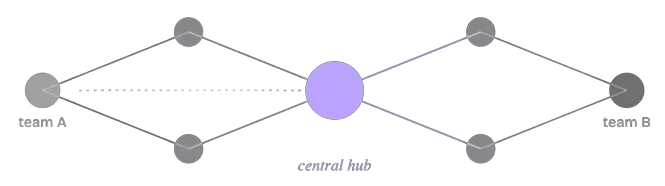
Detect bottlenecks and overloaded hubs
Find the people whose absence would paralyse the organisation. Redistribute load before it becomes risk.
Identify influencers and change agents
Spot who can drive transformation — and who is isolated. Build AI-adoption strategy around real relationships, not org-chart fantasy.
Quantitative, repeatable, fast
4 questions. 20+ algorithms. Results at individual, team, unit and company level — in a few days, not months.
If value-per-person isn’t rising, it’s rarely an individual problem. It’s the way collaboration flows — between people, and between people and AI.
PatPat360 · ACTIVATE EXECUTION
In a world where AI changes the work every quarter, an annual objective is already wrong when you sign it. PatPat360 replaces the MBO model with quarterly OKRs and a compensation architecture built around value creation — not negotiated targets.
OLD MODEL
Management by Objectives (MBO)
TIMEFRAME
Annual — objectives stale before year-end
DIRECTION
Top-down only — no bottom-up input
TRANSPARENCY
Private — people don't see colleagues' goals
INCENTIVE LINK
Directly tied to pay — drives risk aversion
AMBITION
Conservative — nobody sets stretch goals
MOTIVATION
Point-in-time review — engagement falls in between
NEW MODEL
OKRs + Motivation Engine
TIMEFRAME
Quarterly cycles — always current and actionable
DIRECTION
Top-down strategy + bottom-up priorities
TRANSPARENCY
Public — alignment visible across the whole org
INCENTIVE LINK
Social recognition + LTI — decoupled from bonus
AMBITION
Stretch targets — failure at 70% is still success
MOTIVATION
Continuous — daily feedback and recognition

When you remove MBO bonuses, the question becomes: where does the financial incentive go? The answer rewires the contract between company and employee.
THE DISTINCTIVE DESIGN
LTI plans indexed to EVA & EVA People.
When operating bonuses are gone, the financial incentive moves where it belongs: to long-term value creation. We design Long-Term Incentive plans linked to EVA and EVA People — so that the people inside the organisation share in the value they create.
The result: a compensation architecture that aligns daily behaviour with the same metric the CEO presents to the board. No more managing the bonus — managing the value.
PROVENANCE
1
Active Value Advisors · founded 2008
Management consulting on value creation, performance, and organisational design. Clients include Pirelli, Mediobanca, Chiesi, ERG, Bracco, Hera.
2
People Yield · founded 2020
Technology spin-out. Develops and operates HOW4 and PatPat360.
3
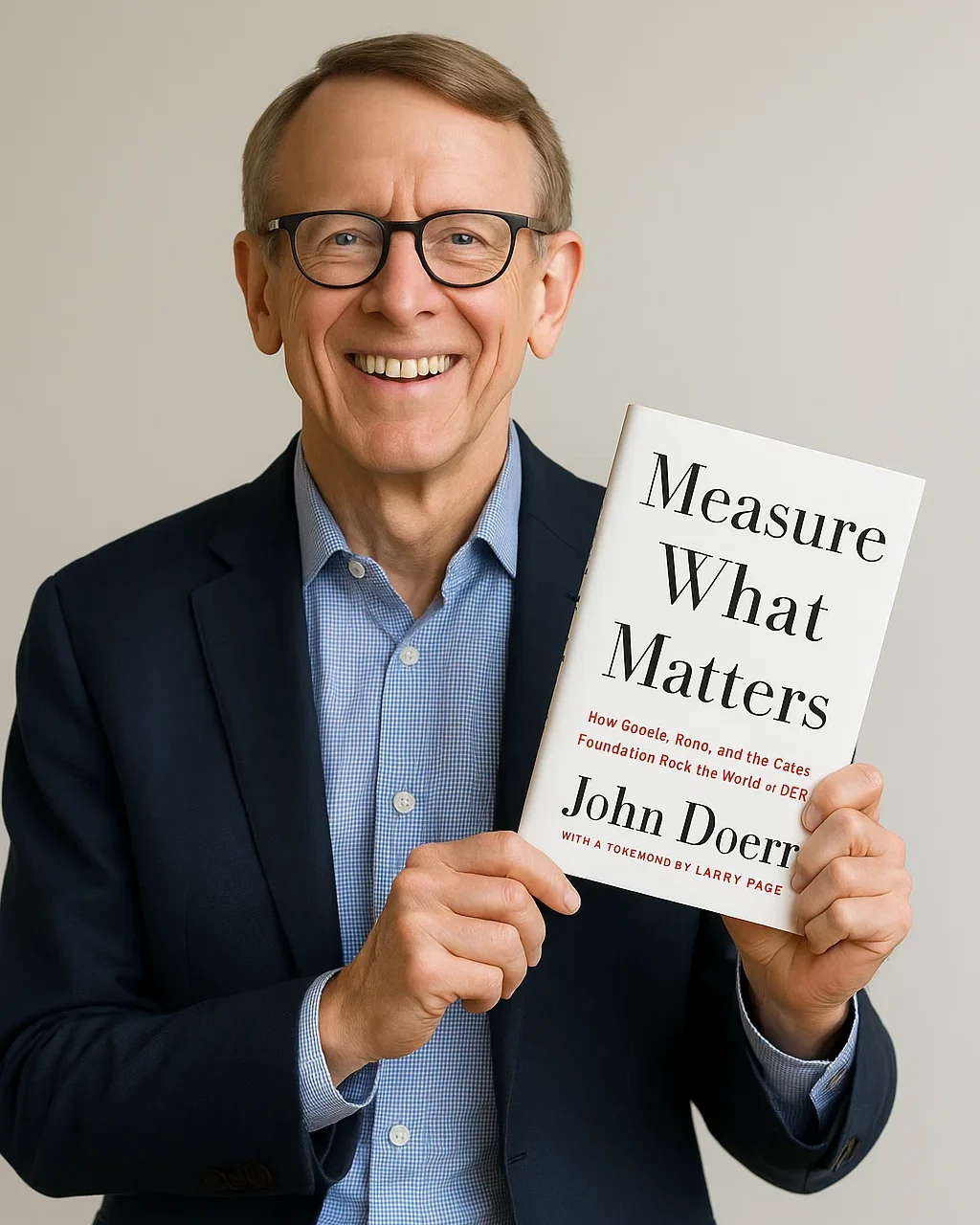
PatPat360 — recognised by John Doerr
Featured among the seven OKR platforms on WhatMatters.com. Featured among the seven OKR platforms on WhatMatters.com. 4.5★ on Capterra and GetApp. Used by 10,000+ people in 12+ countries.
INDUSTRY LEADERS
PatPat360 is among the 7 OKR platforms recommended on WhatMatters.com.
Rated 4.5★ on Capterra and GetApp. Used by 10,000+ people in 12+ countries.
"Many features associated with everyday work applications but streamlined for OKR best practices."
-John Doerr about PatPat360